




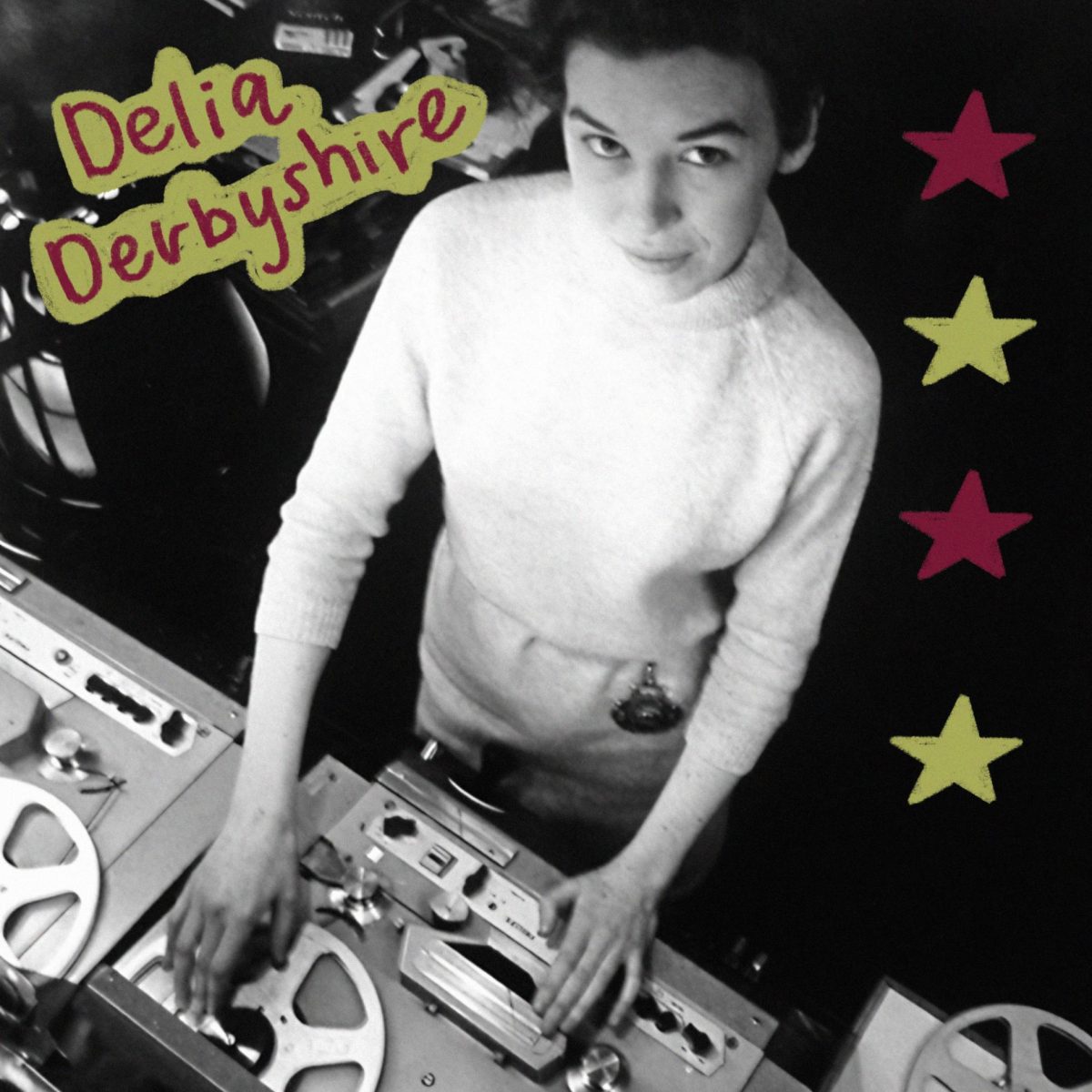
Many people will recognize the work she has done, but very few know the face behind it. Delia Derbyshire has been described as one of the most influential figures in electronic music. Through her career, she went from being a trainee at the BBC to working with musical legends like Yoko Ono and Paul McCartney.
Her influence goes beyond just creating iconic soundtracks for the British network. She is often credited by contemporary electronic artists and historians as the “godmother of electronic music,” influencing artists such as Paul Hartnoll of Orbital, Aphex Twin and the Chemical Brothers. With multiple honors under her belt, it’s clear that Derbyshire’s influence on the electronic music world is substantial.
Before EDM, there was the BBC
Derbyshire’s contributions can be traced back to 1960. After graduating from Girton College in Cambridge, she applied for a position at Decca Records. She was immediately declined because, at the time, the company did not allow women to work in the studio.
After her rejection, she began working at the BBC as a studio manager trainee. She later transferred to the BBC Radiophonic Workshop, working there until 1973. Much of her work was left in obscurity, except for one piece that remains as one of the most iconic television tunes of all time.
In 1963, Derbyshire was tasked with assisting the composer Ron Grainer on his science-fiction show “Doctor Who,” where she was responsible for producing the program’s main theme. Because synthesizers had not been invented yet, she had to create the sounds for the theme from scratch, with each part constructed from a quarter-inch mono tape using techniques like filtered white noise and a “wobbulator.” The result was a theme that sounded futuristic and ahead of its time. It became one of the first television themes to be composed from electronic music, continuing to be used until the 1980s. Because of the BBC’s policies at the time, Grainer was the sole credited composer for the theme, even though he believed Derbyshire should also receive it.
After “Doctor Who”
Derbyshire’s work after “Doctor Who” comprised various projects while at the BBC. In 1964, she collaborated with dramatist Barry Bermange on four “Inventions for Radio” pieces, designed to showcase how radio could be used as an art form. One of these broadcasts was “The Dreams,” pairing descriptions of people’s dreams with electronic music composed by Derbyshire, in which much of the sound was made from manipulating sound recordings of striking a metal lampshade. She also helped form the group Unit Delta Plus with Peter Zinovieff and fellow workshop member Brian Hodgson in 1966.
Derbyshire even continued to work on television after her big success with “Doctor Who.” She worked on the documentary “The World About Us” in 1967, created by David Attenborough. The piece she worked on about the Tuareg people of the Sahara Desert incorporated her own voice as well as all the oscillators in the Radiophonic Workshop. She was also part of the group White Noise alongside Hodgson and David Vorhaus in 1968. Together, they released the album “An Electric Storm” a year later.
Eleven years and nearly 200 tapes later, Derbyshire would leave the Radiophonic Workshop. She then began working at Electrophon in Covent Garden with Hodgson, where she would be for only a brief amount of time before leaving London. She continued to work on music either as freelance projects or in private until her death in 2001 at the age of 64. After she passed, about 267 tapes were recovered from her attic in Northampton.
Delia Derbyshire laid the groundwork for modern electronic music. Her creativity and ingenuity gave way to the most innovative tracks of their time and the framework she laid out would continue to influence generations of artists. While she may not be able to see the full extent of her influence, it is clear that she left a mark on modern music.
Jon Gamble • Feb 10, 2026 at 4:32 am
Wonderfully informative, Dash – and a much deserved biopic of a pioneering women who because of the unenlightened times in which she was working, remained largely invisible – until now!
Roger Lord • Feb 10, 2026 at 2:35 am
Dash has the gift for words. Absolutely fab. Did he kiss the Blarney stone?
Shazza • Feb 10, 2026 at 12:30 am
Fascinating, I want to hear her work …