



Cover songs are everywhere in the music world. They have played an important part in recognizing the work of all artists, with many of them overtaking the popularity of the original recording. In many instances, it can overshadow the original artists’ work to the point where they aren’t given the recognition they deserve.
When a cover’s popularity skyrockets
There are many instances of successful cover songs in the industry. One of the biggest was the song “I Love Rock ‘N’ Roll” by The Arrows, whose original recording is seemingly unknown to general audiences as the cover by Joan Jett is the version many people will instantly recognize. In fact, that version in itself was covered by pop artist Britney Spears and parodied by comedy artist “Weird Al” Yankovic.”
A similar example is Jimi Hendrix’s cover of Bob Dylan’s “All Along the Watchtower,” which reached the top 20 on the U.S. Billboard Hot 100. Hendrix’s cover outperformed Dylan’s by so much that whenever Dylan performed the song live, the performance was influenced by Hendrix’s rendition of the song. The song is now widely associated with Hendrix.
Another example of a cover’s popularity is “Beggin” by The Four Seasons. Originally released in 1967, the version modern audiences are most familiar with is the cover by Italian rock group Måneskin, whose cover peaked at No. 13 on the Billboard Hot 100 in the United States and reached the top five of the Billboard Global 200.
Same song, different meaning
Another thing cover songs are good at is transforming the meaning of the original. One of the best examples of this is the song “Hurt,” originally done by American industrial rock band Nine Inch Nails. When American country singer Johnny Cash decided to cover the song for his final studio album, his version was met with acclaim.
Trent Reznor, the lead singer of Nine Inch Nails, said that Cash’s cover is the superior version. “I just lost my girlfriend, because that song isn’t mine anymore,” Reznor said. Because the song was covered in the later years of Cash’s life (during which he was suffering from poor health), the meaning of the song has changed significantly and is regarded by critics as one of Cash’s best works, even though the song was not written with him in mind.
Another example is the Run-DMC cover of American rock band Aerosmith’s “Walk This Way,” done in collaboration with the band itself. While the original recording was already popular, charting at No. 10 on the Billboard Hot 100 at the time of its release, the Run-DMC cover ultimately peaked at No. 4 on the same chart. It is often cited as revitalizing Aerosmith’s career as well as a touchstone for the merging of rock music and hip-hop.
Song in the spotlight, artist in the shadow
While cover songs are incredibly popular, many of them can overshadow the original artists. Circling back to Joan Jett, the song’s streaming numbers on music platform Spotify are over 600 million compared to the original song by The Arrows with only 12 million. The disproportionate ratio makes sense when you realize that not many people know that Joan Jett’s song was a cover.
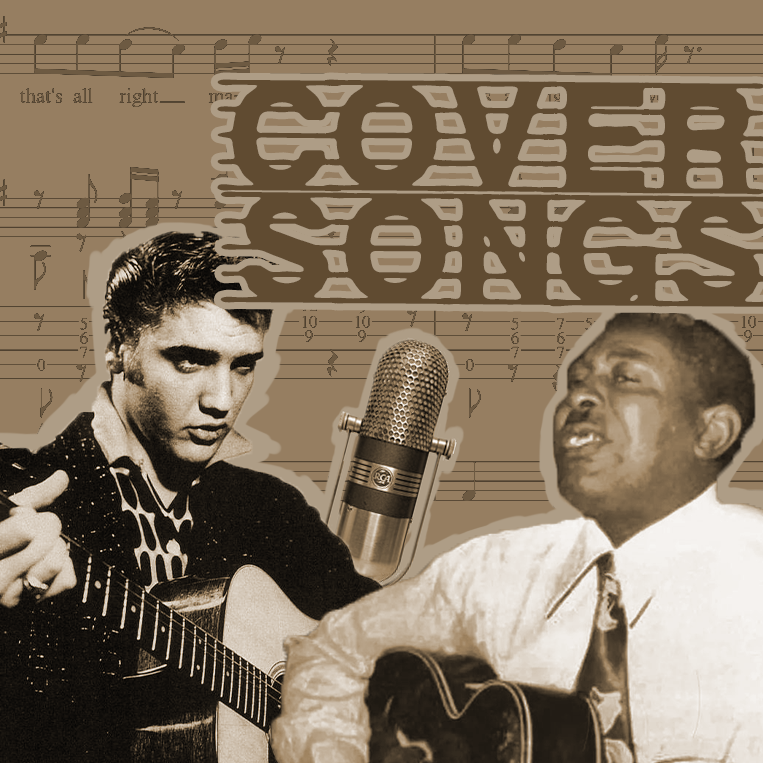
The best example of covers overshadowing the original comes from Elvis Presley. His debut single “That’s All Right” was actually a cover of the song of the same name by American blues singer Arthur Crudup. Despite being credited as a composer, Crudup received little to no royalties from Presley’s recording or from other artists who covered his songs, including The Beatles, B.B. King and Elton John, and ended up supporting his family as a farm worker.
This was largely because at the time, the rights to songs were held by the publishers and labels, meaning they had the say in how the music was used, not the artist who wrote and recorded it. This was especially exploitative toward African American musicians through unfair contracts giving them the right to profit off their music.
Presley’s catalog consists primarily of covers of songs by other blues musicians and is credited with bringing rock ’n’ roll to the mainstream. Songs like “Hound Dog” by Big Mama Thornton and “Blue Suede Shoes” by Carl Perkins were all made famous by Presley’s recordings. Those artists did not receive wide recognition and, like Crudup, never received royalties. For Thornton in particular, she died in poverty in Los Angeles and was buried in a shared pauper’s grave.
Cover songs are an interesting facet of the music world because they can make an artist’s career while overshadowing another’s. However, cover songs can help bring the work of the original artist to a further reach than originally thought, with the history behind them being just as compelling.
? • Nov 22, 2025 at 7:21 pm
Hi dashiell, I think you can guess who this is.
Good job on the article easily your best yet, but two things, one the best cover ever is Led Zeppelins cover of nobody’s fault but mine by blind Willie Johnson and two HOW DID YOU NOT MENTION THAT RESPECT BY ARETHA FRANKLIN IS A COVER OF AN OTIS REDDING SONG