




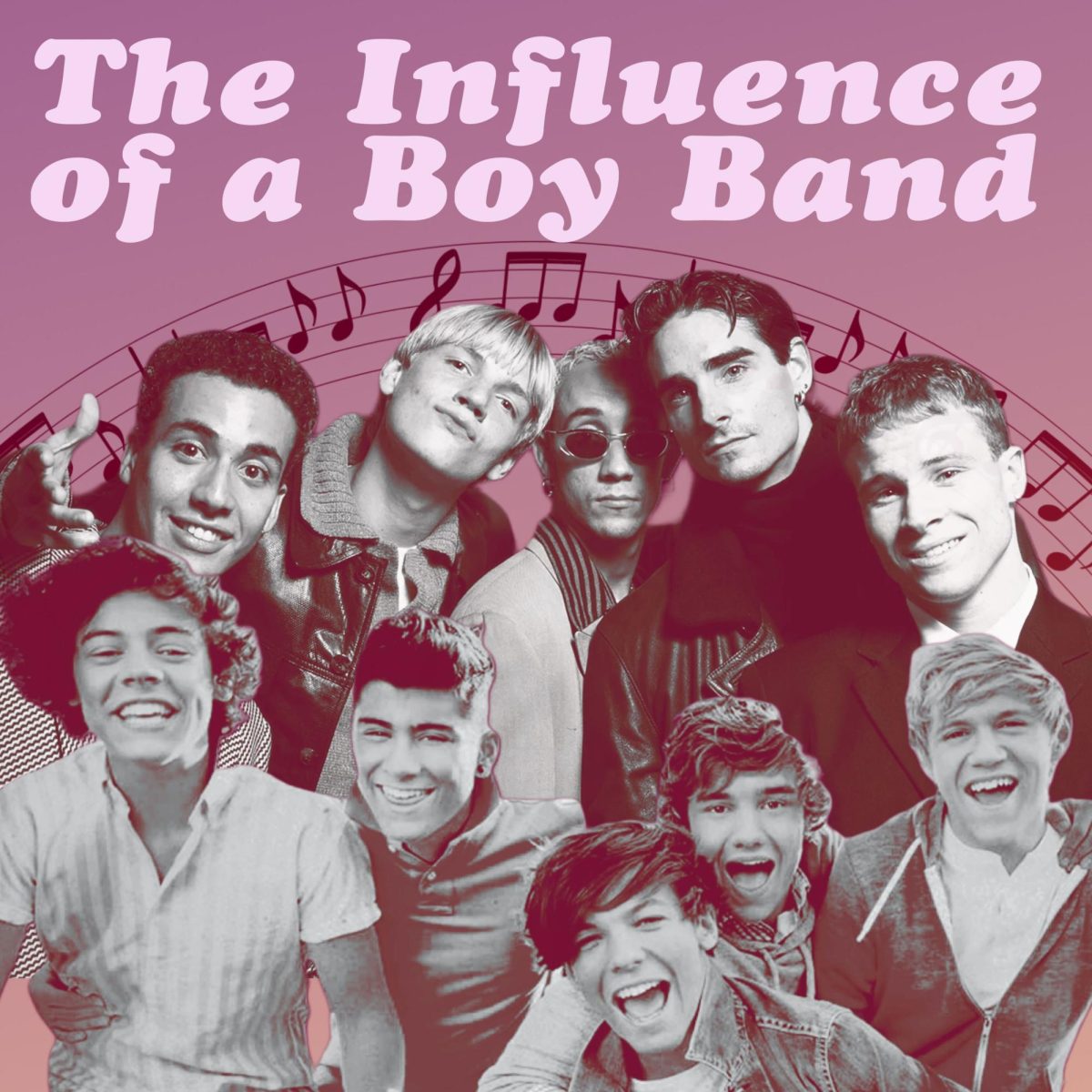
When One Direction jumped onto the global music scene in the early 2010s, they became an unstoppable force in pop culture. Their success cemented them as one of the most influential boy bands of the 21st century. Their rise didn’t happen in isolation, decades earlier, the Backstreet Boys helped lay the groundwork and redefined what a boy band could achieve.
Before the era of social media, the Backstreet Boys dominated radio, MTV and arenas worldwide. The legacy of boy bands is one of evolution. One Direction’s monumental impact would simply not exist without the foundation built by the Backstreet Boys.
Paving the way
Formed in 1993, the Backstreet Boys quickly became icons of the boy band epidemic. AJ McLean, Howie Dorough, Nick Carter, Kevin Richardson and Brian Littrell became thousands of girls’ celebrity crushes. Their breakthrough album “Backstreet Boys (1996)” set them on the path to international superstardom, but it was their follow-up albums, “Backstreet’s Back” and especially “Millennium,” that solidified their status as icons. Millennium shattered records upon its release, becoming one of the best-selling albums of all time and earning multiple Grammy nominations. Songs like “I Want It That Way,” “Larger Than Life” and “Show Me the Meaning of Being Lonely” became global anthems. Their influence extended far beyond charts and awards. They changed how boy bands were marketed, how they performed and how fans connected with them. Teenage girls longed for the Backstreet Boys. The emotional depth and vulnerability woven into their music reshaped expectations for what boy-band pop could express and how profoundly it could resonate with listeners.
Much of this came from their lyrics. Heartbreak, yearning and emotion that spoke directly to teenage experiences. These themes created a template that One Direction would later mirror in tracks like “Night Changes.” This emotional continuity helped 1D cultivate a similar kind of devotion among teenage girls alike. Their longevity should also be noted. Their career as the Backstreet Boys spanned over 30 years, proving that boy bands didn’t have to fade away.
The 1D legacy
Nearly two decades later, One Direction took the world by storm after forming on The X Factor UK in 2010. This appearance on The X Factor is fairly iconic and a very different band start compared to The Backstreet Boys. Harry Styles, Liam Payne, Louis Tomlinson, Niall Horan and Zayn Malik became the new celeb crush for the new generation of teenage girls. Their debut single, “What Makes You Beautiful,” instantly became a classic. The group quickly achieved global fame. Their albums, “Up All Night,” “Take Me Home,” “Midnight Memories,” “FOUR” and “Made in the A.M,” consistently topped charts and they became known for their energetic pop-rock sound and magnetic personalities.
Social media also allowed fans to feel closer to 1D more than ever before, helping them create one of the most devoted fanbases in modern music history. Despite being together for only six years, 1D’s accomplishments rival those of artists with decades-long careers. The breakup of 1D is still commonly discussed and mourned. Fans are praying for a reunion. As a band, they won countless awards, broke touring records and left a permanent mark on pop. Each member’s solo career continues to thrive. Styles has had a specifically successful solo career; his latest album, “Harry’s House,” won three Grammys at the 65th Annual Grammy Awards.
If One Direction had stayed together, it’s not hard to imagine them releasing an album with the same impact as Millennium or even exceeding it. But even in their hiatus, their influence is unmistakable. Boy bands that followed draw from the model One Direction refined, just as One Direction built on the foundation laid by the Backstreet Boys. Groups like Why Don’t We, PRETTYMUCH, and The Vamps adopted One Direction’s authenticity and social-media-driven fan connection. Together, these influences shaped a new generation of boy bands that blend relatability with polished pop storytelling. One Direction’s rise to fame marked a new era for boy bands and the fangirl era. One that the Backstreet Boys created.