



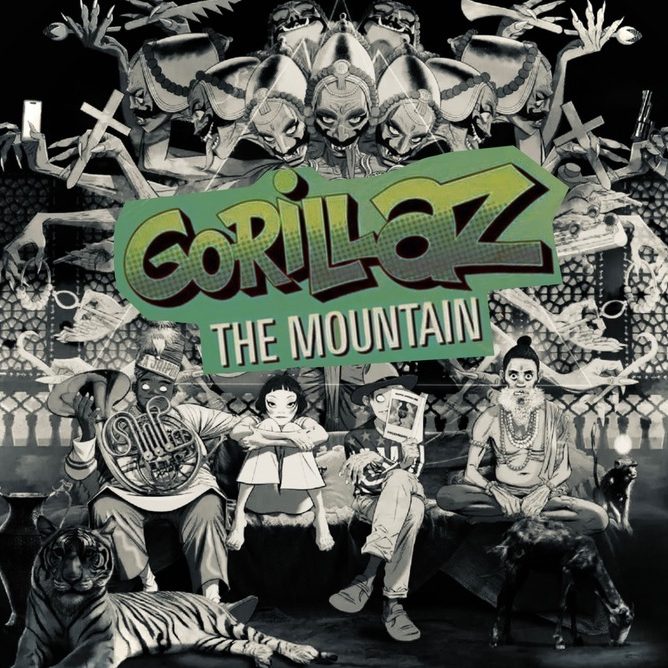
Death rarely sounds joyful in music. It’s a topic filled with sadness, grief, and many different emotions we cannot comprehend. And given Damon Albarn and Jamie Hewlett’s experiences with loss, one would expect similar themes to be carried over to their next record. Oddly enough, though, “The Mountain,” their latest album about death, takes a different approach inspired by Indian culture.
The ninth album by the virtual band Gorillaz is an acknowledgement of death, but instead of taking on a mournful, melancholy tone, it’s very lively and celebratory. The reason for this shift has to do with where Albarn and Hewlett visited for inspiration. Inspired by Indian culture, the album reflects the idea that death is a step toward rebirth.
Death in “The Mountain”
Before the conception of “The Mountain,” Albarn and Hewlett both experienced the loss of their fathers. It was the first time in a long time that they had felt a unified connection with each other, and they used that connection to form an album exploring death and the afterlife. The choice to visit India was also important, as it allowed them to see how cultures outside the West approach death and the afterlife.
Much of the album’s 15 tracks explore death from different perspectives. Several songs question whether people truly fear death. In “Orange County,” the lyrics proclaim that “the hardest thing is to say goodbye to someone you love,” while also worrying about living up to that person’s expectations. Another track, “The Empty Dream Machine,” has Albarn reflect on the transition in his life after his father passed.
The instrumentation also contributes to the album’s cohesion. Sitars, orchestral motifs and multiple languages make the record feel like a journey, brought to life by professional Indian musicians like Amaan Ali Bangash and Ayaan Ali Bangash, both of whom give the music an authentic feel. Tracks such as “The God of Lying” feature reggae-style percussion, while Johnny Marr provides soft acoustic guitar on “The Sweet Prince.”
The Idea of Reincarnation
The album’s guest collaborators reinforce its themes of death, many of whom make posthumous appearances, including Dennis Hopper, Bobby Womack, Tony Allen, David Jolicoeur of De La Soul, and Proof. These appearances deepen the album’s meditation on mortality. Hearing their voices feels almost spiritual, as if the listener is glimpsing what lies beyond the metaphorical mountain. In the title track, Hopper describes an afterlife of “serenity and beauty,” a place “where all good souls come to rest.” The imagery suggests that death leads somewhere peaceful rather than frightening.
The album also explores the idea of reincarnation, which appears not only through collaborators who have passed away but also through the companion short film released alongside the album. The short sees animated band members — 2D, Russel, Murdoc and Noodle — journey through the mountain and ends with them sinking into the river as the track “The Sad God” plays, symbolizing the journey of life and death, showcasing an idea imperative to the Hindu and Buddhist religions: reincarnation.
Both religions see the importance of death as the next step towards reincarnation, and the way the ending of the short film is presented resembles how, in India, people will send the cremated ashes of loved ones onto the Ganges River and spread them across the water. The imagery evokes that same spiritual send-off into the next life. Even in the lyrics of “The Sad God,” rapper Black Thought imagines reaching heaven only to reject it and move forward. It reinforces the album’s central theme of life, death, and rebirth.
“The Mountain” is an album dealing with death, its spiritual meaning and what may lie beyond it. Albarn and Hewlett’s experiences, combined with their exposure to the Indian perspective on death, helped create an album that transforms India’s view of death as a gateway into a full musical experience. In doing so, Gorillaz transform grief into something reflective rather than mournful, suggesting that the end of life may simply be the beginning of another journey.