




Tuning in and surfing the airwaves can be a great way to relax. But, just as the tides ebb and flow, so too do ads and interruptions from hacks.
The empire provides safe passage to those who stay within her seaway. And for her protection, she demands a tribute of your free speech. But the sea once promised a treasure far greater to those who sought splendor and adventure. To those who seek a merry life, and a short one at that, let’s embark on an adventure into pirate radio stations.
Radio regulations and the rise of punk ideology
Much like broadcast television, radio media is subject to tight regulations, far exceeding its print counterparts.
Under the purview of the Federal Communications Commission (FCC), broadcasters are required to serve the “public interest, convenience, and necessity” of their local communities. They are forbidden from broadcasting obscene and pornographic content and required to provide equal opportunities for advertising and airtime to political candidates.
This is enforced by the FCC issuing revocable licenses to broadcast over specific frequency bands. The government’s ability to regulate First Amendment speech is justified by the scarcity of airwaves. The usable radio frequency spectrum is finite, while broadcasting is comparatively easy, making it a scarce public resource.

While rock n’ roll was kicking off in the U.S., rebellious disc jockeys dropped anchor in international waters and began broadcasting the counterculture movement to the British nation. This was in response to the BBC’s monopoly and regulation in the 1960s.
Across the pond, the hippie counterculture was looking for a way to spread their ideas of peace and love to the masses, and free radio was a great means. In New York City, the Falling Star Network broadcast on AM and FM with brazen transmission power, 24 hours a day, with a small army of volunteers. But these examples are few and far between, with few hippies having the technical know-how and motivation to operate a radio station.
But regulators cracked down on both sides of the Atlantic, and the pirate radio stations of the 60s ended up as just a short disturbance in the electromagnetic field. Yet their cultural memory endured.
A resurgence of social and individual freedom on the airwaves
The 1980s and 90s saw a resurgence in free radio, with a period of economic recession and angst coinciding with the cost of broadcasting equipment dropping.
Radio is intrinsically local, but especially with this little power, and so these radio stations served neighborhoods and small community enclaves. Some provided immigrant communities with programming in their native language, and many grew to support local subcultures.
It’s not a surprise that these broadcasters, who were violating federal law as a hobby, identified with the anti-establishment ethos of the hip hop, hardcore, punk and noise scenes. With a platform to share their ideas, and a means of advertising local events, these scenes flourished.
And the FCC wasn’t pulling punches. Free Radio Berkeley, a station founded with the intention of engaging in “electronic civil disobedience,” was hit with a $20,000 fine, raids and a protracted legal battle in federal court. Even stations that requested a license, such as Micro Kind Radio, saw their checks returned, and fines levied. But the FCC was fighting a hydra, and for every transmitter they confiscated, two more seemed to take its place.
With free expression at its height, there was an incredible evolution of genre and music in the late 90s and early 2000s. Artists could hear others push boundaries, carve out a sound for themselves and share it. And barring physical release and live performance, free radio was the only way to hear it.
You wouldn’t expect to find pirates in a landlocked state
In the 2000s, the Salt Lake Valley had a few scallywags of her own. In 2004, SLUG Magazine interviewed Tecspectr, an engineer who sporadically broadcast on 95.9 FM. If you tuned in, you could expect “radical sociopolitical commentary,” half-hour blocks of songs you wouldn’t hear anywhere else and “whatever the hell else he feels like putting on.”
Bringing an 8-foot-tall antenna, a mixer, headphones, a Discman, a microphone and a 4-watt phase lock loop FM transmitter, they were able to set up a broadcast outside their office that traveled seven blocks in each direction. If they put the antenna on the roof, he predicted they’d hit “downtown and the University easily” from Sugarhouse.
So, you want to be a pirate
If all this talk has you ready to sail the high seas, you’ll need a vessel. The first consideration to make is: which band will you broadcast on? If you are trying to reach a local and wider audience, you will want to operate on either the AM or FM broadcast bands. For longer distance transmissions, you will want to use shortwave bands.
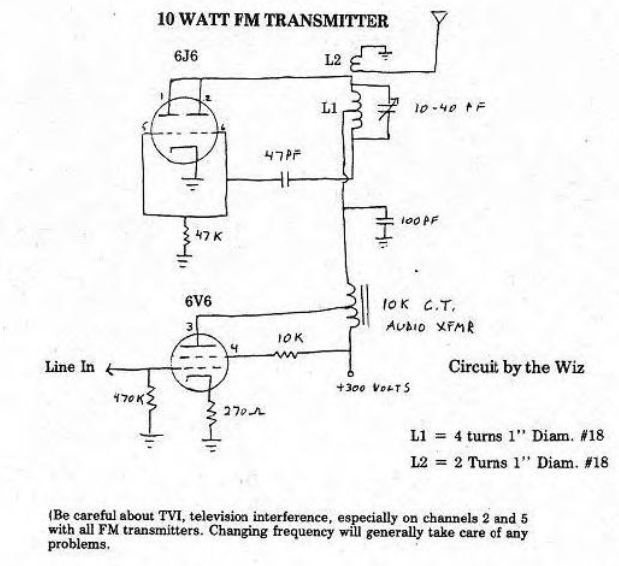
But all forms of amateur broadcasting are illegal, and cheap transmission equipment or operator error can create interference with emergency or aviation communications.
These challenges and constraints bring us to the world of internet radio. With minimal effort, you can share music and ideas of all sorts with a worldwide audience and tune in and hear music you’d never otherwise hear.
Under this backdrop in 2008, a year after K-UTE lost its frequency and was poised to go under, it “rose from the ashes” with a few remaining volunteers creating an online web-player. With unprecedented freedom on air, their goals shifted to providing “balls-to-the-wall renegade radio.”
It’s a blessing for a man to have a hand in his own fate
With the rise of streaming services and music-based short-form content, the problem of finding and sharing new music has been largely solved. On demand, you could listen to Kazakh breakcore or music from the guy down the street.
Our ability to share ideas and media is no longer constrained by the physical limitations of airwaves or physical distributions. Rather, individual voices are drowned out under the sheer scale of the internet.
The internet has offered many new avenues for self-expression, but at the same time, these expressions must compete with the rest of the world. Individual artists can address hundreds of millions at once, and users substitute conversation with passive interactions with thousands of strangers.
While having wide exposure to the world at once can yield great inspiration, it can also be incredibly stifling. There is no longer a requirement to create and meaningfully engage with content. And this is worsening with AI, which has allowed us to become passive consumers of unthought thoughts.
Take back the airwaves
It’s hard to feel like the internet belongs to the people anymore, with media becoming increasingly consolidated in the hands of the wealthy, used as a tool to sow division and spread misinformation. So, how do we take back control of the content we create and consume? How do we start to listen to voices in our community again?
We must take back the airwaves. While the listening experience might not differ much, listening to music that is dear to a stranger and was carefully laid out imbues a sense of humanity and care into it. Pirate radio stations are often limited to a few city blocks, so listening requires you to engage with your neighbors and the community around you. While internet radio lacks these limitations, local radio discussing local issues can attract a local audience and can allow for novel broadcaster and listener interaction.